
Managing a grievance can involve many moving parts. Union staff may need to document the original issue, maintain member and employer information, track important dates, organize supporting documents, record case activity, follow the grievance through multiple steps, and, when necessary, prepare for arbitration. When that information is spread across spreadsheets, email, shared folders, paper files, and individual staff notes, keeping a case organized becomes more difficult. More importantly, important information can become harder to find when staff need it most. Grievance tracking software for unions provides a more structured way to organize case information from the initial grievance through resolution or arbitration. For union staff, the practical value is clear: maintain a better view of each case, its history, important dates, documents, and current status in one organized workflow.
Why Union Grievance Tracking Can Become Complicated
A grievance is rarely just one record. As a case progresses, staff may need to manage different types of information, including:
- Member and employer information
- Grievance details
- Relevant contract information
- Case status
- Important dates and deadlines
- Meetings and activity
- Supporting documents
- Notes and correspondence
- Representatives involved
- Arbitration-related information
- Final outcomes or resolutions
Furthermore, the case may continue for weeks or months and involve several people along the way. Therefore, effective union grievance tracking requires more than storing a description of the original issue. Staff need a practical way to maintain the complete case as it develops.
Start With an Organized Grievance Record
The grievance record should provide a clear starting point for the case. Instead of keeping the original complaint in one location and related information somewhere else, staff can organize essential details around a central case record. That record can provide context about the grievance, the people or organizations involved, and the current stage of the process. As a result, authorized staff do not need to reconstruct the case every time they work on it. This becomes especially valuable when multiple representatives or staff members are involved. Rather than depending on one person’s notes or inbox, the organization can maintain a more consistent case history.
Keep Grievance Status Clear as Cases Progress
Grievances move through a process. However, when staff manage multiple active cases, remembering exactly where each grievance stands can become difficult. One case may require additional information. Another may be waiting for a response. Meanwhile, another grievance may be moving toward arbitration. Therefore, grievance case management software should help staff maintain a clear view of case status throughout the process. A structured status makes it easier to understand what has already happened and what may require attention next. Additionally, clearer case visibility can help reduce dependence on informal updates between employees. Instead of asking who last worked on the grievance, authorized staff can begin with the case record.
Track Important Grievance Dates and Deadlines
Dates can be critical during grievance administration. Depending on the agreement and the organization’s procedures, different steps may have specific timelines or deadlines. Consequently, important dates should not exist only in someone’s calendar, email, or handwritten notes. Organizing relevant dates alongside the grievance record provides staff with better context. For example, a case may involve dates associated with:
- The original issue
- Grievance filing
- Meetings
- Responses
- Process steps
- Follow-up activity
- Arbitration
- Other organization-specific requirements
The exact process varies between organizations and agreements. Nevertheless, the operational principle remains the same. Important case dates should be connected to the case they affect.
Connect Grievances With Relevant Member Information
A grievance relates to people, not simply a case number. Therefore, staff may need appropriate membership information when reviewing or managing the case. When grievance records and member information are maintained separately, employees may need to switch between systems or manually verify information. A more connected approach can provide better context. By associating the grievance with the appropriate membership information, authorized staff can work from a clearer understanding of the case and the member involved. This is one advantage of managing grievances within broader union membership management software rather than treating grievance tracking as a completely isolated process.
Connect Cases With Agreements and Contract Information
Contract information can also be important when managing grievances. Staff may need to understand which agreement applies to a case or access relevant contract information as the grievance progresses. If contracts are stored in one location and grievances somewhere else, employees must manually make that connection. Therefore, connecting grievance administration with organized union contract management can reduce unnecessary searching. Instead of treating the grievance and agreement as unrelated records, staff gain better context around the information supporting the case. This can become particularly useful as a grievance moves through additional steps or toward arbitration.
Keep Grievance Documents Organized
Cases can accumulate documents quickly. The original grievance, supporting records, correspondence, responses, meeting information, notes, and arbitration-related materials may all become part of the case history. If those files are scattered across email attachments and shared folders, staff may spend significant time searching for the correct document. Furthermore, duplicate copies can create uncertainty about which version should be used. A structured union grievance management system can help keep relevant documents associated with the appropriate case. As a result, authorized staff have a more organized place to access the information supporting the grievance.
Maintain a Clear Case History
Understanding what has already happened is essential when managing an active grievance. Staff may need to know:
- What action was taken?
- When did it happen?
- What information was received?
- Who was involved?
- What happened at the previous stage?
- What should happen next?
Without a consistent case history, employees may need to search through emails, notes, or previous conversations for answers. In contrast, organized grievance tracking helps maintain continuity as the case develops. This can be particularly valuable when responsibility moves between staff members or when another representative needs to become involved.
Reduce Manual Grievance Tracking
Spreadsheets can provide a useful overview of active grievances. However, as case complexity increases, a spreadsheet may become only one part of a much larger manual process.
For example: Spreadsheet → email → document folder → calendar → member record → contract → case notes
Every transition requires staff to locate or maintain another piece of information. Additionally, changes in one location may not automatically be reflected elsewhere. Grievance tracking software for unions can help reduce these disconnected workflows by bringing relevant case information into a more structured environment. Consequently, staff can spend less time maintaining parallel records and more time managing the actual grievance process.
Prepare More Effectively When a Case Moves Toward Arbitration
Not every grievance reaches arbitration. However, when one does, having an organized case history becomes increasingly important. Staff may need to review the original grievance, previous activity, relevant dates, documents, agreement information, correspondence, and other supporting records. If that information has been maintained consistently throughout the case, preparation becomes more manageable. Instead of rebuilding the history from several sources, authorized staff can begin with an organized grievance record. Therefore, effective arbitration case tracking begins long before arbitration itself. Good organization throughout the grievance process creates a stronger foundation if the case reaches that stage.
Keep Arbitration Information Connected to the Case
When a grievance proceeds to arbitration, the case does not suddenly become a separate operational record. It is the continuation of the same grievance. For that reason, arbitration-related information should remain connected to the case history that came before it. This helps preserve context. Staff can understand how the grievance developed, which steps were completed, what documents are relevant, and what information may be needed as the process continues. A connected approach also helps avoid creating another isolated set of files specifically for arbitration. Instead, the organization maintains continuity from the initial grievance through the later stages of the case.
Improve Visibility Across Active Grievances
Managing one grievance is different from managing many. When staff are responsible for multiple cases, they also need an operational view across their workload.
- Which grievances are active?
- Which cases have upcoming dates?
- Which cases have progressed to another stage?
- Which grievances may require follow-up?
- Which cases are moving toward arbitration?
Organized union grievance management software can help staff maintain clearer visibility across active cases rather than relying entirely on individual reminders or separate tracking sheets. As a result, teams can better understand where attention may be required.
Protect Access to Grievance Information
Grievance records may contain information that should not be available to every system user. Therefore, organization and security need to work together. Membership organizations should consider which roles require access to grievance information and whether those permissions remain appropriate as staff responsibilities change. Additionally, authentication controls can help strengthen how authorized users access the system. The objective is not simply to store grievance records securely. It is to make case information available to the appropriate people while maintaining control over access. This makes secure document management and appropriate user permissions important parts of the broader grievance-management process.
Better Grievance Data Supports Better Reporting
Structured grievance information can also make reporting more useful. When case data exists primarily in emails and documents, understanding activity across multiple grievances requires significant manual work. However, organized records can provide a stronger foundation for reviewing grievance activity. Depending on an organization’s requirements, staff may need to understand case status, activity, outcomes, or other operational information. Therefore, structured data does more than improve individual case management. It can also give union staff and leadership better visibility into the grievance workload as a whole.
How PRIZM Supports Grievance Tracking
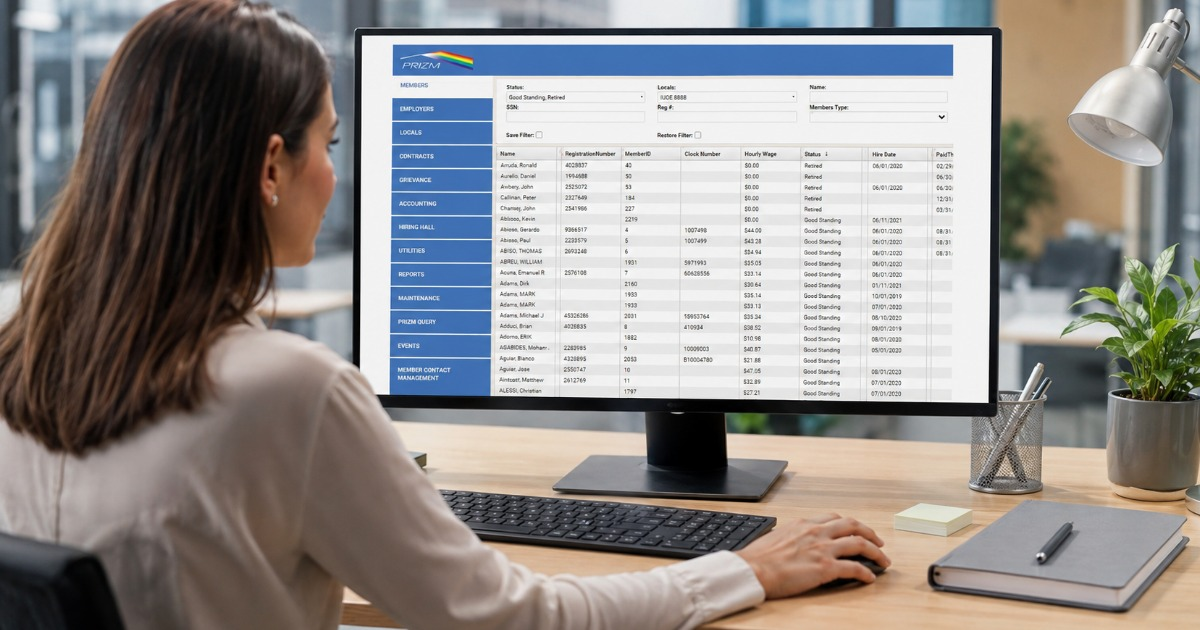
PRIZM is designed around the practical administrative needs of labor organizations. PRIZM grievance tracking helps unions organize important case information and maintain greater continuity as grievances move through their established processes. Rather than relying on disconnected spreadsheets, documents, and individual records, authorized staff can work within a more organized environment for grievance administration. By connecting relevant case information, dates, documents, membership context, and case activity, PRIZM can help staff maintain a clearer view of the grievance from its initial stages through resolution or arbitration. Most importantly, the technology supports the union’s established grievance process rather than defining it. The practical objective is straightforward: Give union staff an organized way to understand where a grievance stands, what has happened, and what information they need next.
From Initial Grievance to Arbitration
Grievance management requires continuity. Information collected at the beginning of a case may become important much later. Dates need context. Documents need organization. Staff need to understand previous activity. Furthermore, cases that move toward arbitration require access to the history developed along the way. That is why grievance tracking software for unions can provide practical value beyond simple case storage. A structured approach helps bring the pieces of the grievance together so staff can manage cases with greater organization, visibility, and control.
For unions looking to improve how grievance cases are managed from filing through arbitration, explore PRIZM features to see how a more connected approach can support the process.